Looking Back at ADDS 2025: Steps Toward Regulatory-Ready Digital Endpoints
As we settle into 2026, it is valuable to revisit the key milestones that shaped the digital health landscape last year. One standout moment was the ADDS conference held in Basel on September 12, 2025. It brought together industry leaders to tackle a critical challenge: moving digital endpoints from concept to regulatory reality.
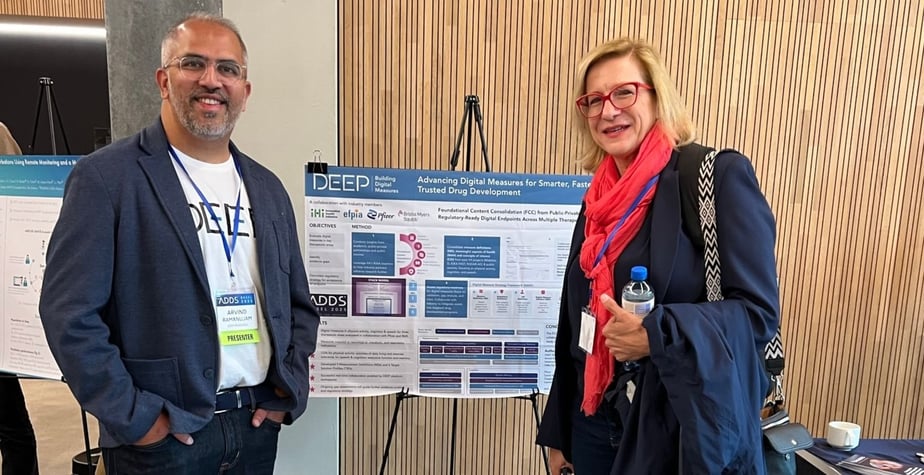
For those revisiting the progress made in 2025, our poster, “Advancing Digital Measures for Smarter, Faster, Trusted Drug Development,” remains a vital resource. Here is a retrospective on the Foundational Content Consolidation (FCC) initiative and what it achieved.
The Mission: Bridging the Regulatory Gap
Presented in collaboration with Pfizer and Bristol Myers Squibb, the FCC initiative was designed to evaluate digital measures in key therapeutic areas and formulate a strategy for their regulatory acceptance. The project addressed a persistent industry hurdle: identifying evidence gaps to ensure these digital tools are ready for trusted use in drug development.
Key Achievements from the Initiative
By consolidating insights from academia, public-private partnerships (like Mobilise-D and RADAR-AD), and public sources, the team delivered tangible frameworks that continue to guide research today.
Highlights from the project included:
- Solid Frameworks: The creation of 5 Measurement Definitions (MDs) and 6 Target Solution Profiles (TSPs).
- Gold-Standard Alignment: The developed TSPs were found to be comparable to existing gold standards, validating their potential for clinical application.
- Multi-Domain Focus: The research covered physical activity, cognition, and speech.
- Therapeutic Impact: Measures were mapped across neurological, metabolic, and respiratory indications.
Methodology: The DEEP Stack Model
A core component of this success was the DEEP Stack Model. This modular approach allowed the team to structure content effectively, reuse components, and identify critical gaps. It enabled the consolidation of "Meaningful Aspects of Health" (like Activities of Daily Living) and "Concepts of Interest" (such as executive function) into a coherent strategy for regulatory readiness.
Lasting Impact
The ADDS 2025 presentation showcased a scalable, collaborative approach that lays the groundwork for the real-world adoption of digital endpoints. The ongoing gap assessments initiated then are still relevant as they guide further evidence curation and regulatory strategies.
Revisit the full details of this foundational work in our abstract and poster.